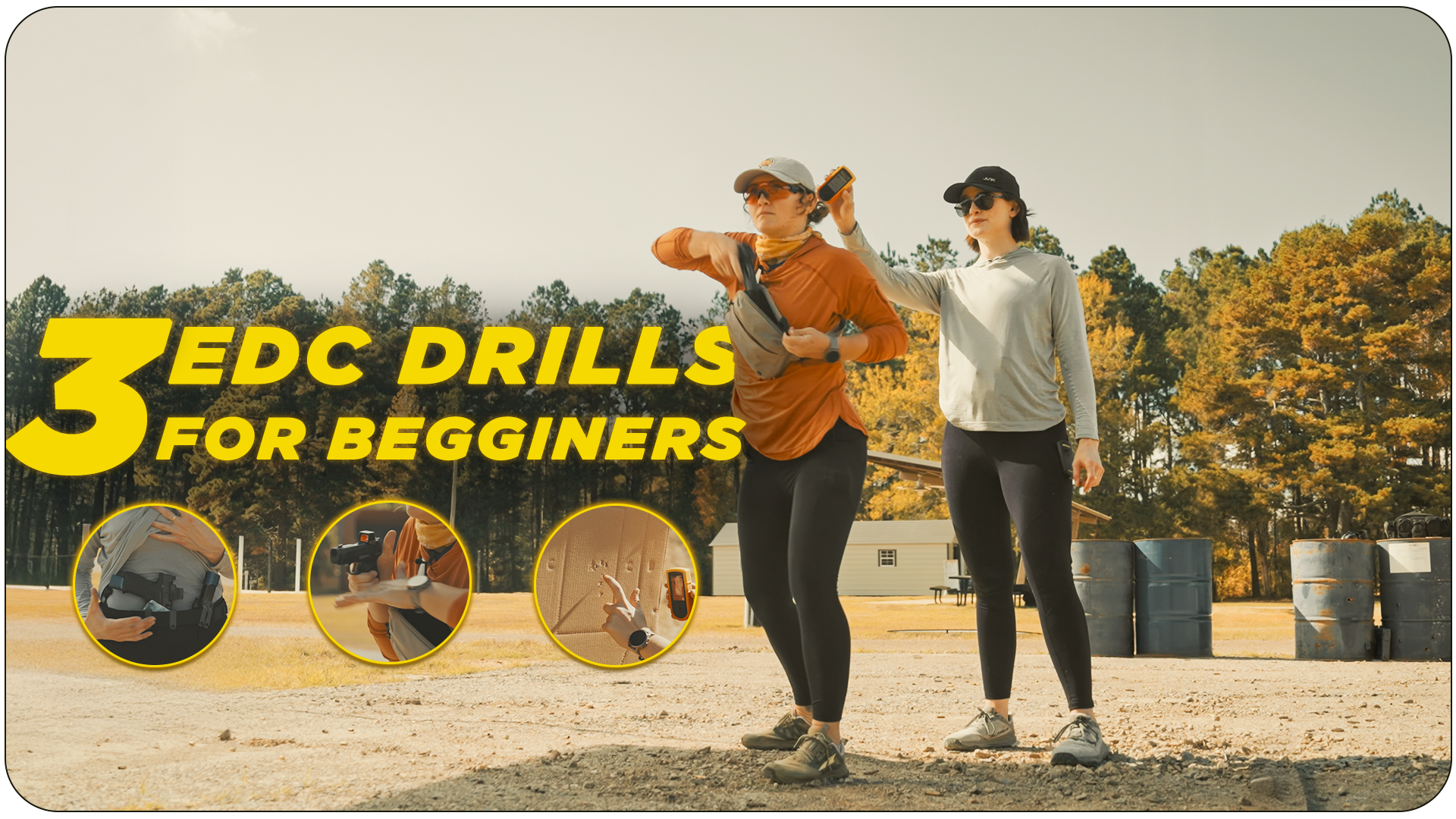
How to Improve Your EDC Skills? Many shooters separate the worlds of competitive sports and personal protection. However, world-class champion Lena Miculek and Sophia Espina argue that competition is actually the most efficient training ground for your Everyday Carry (EDC) readiness.
As Lena points out:
«If you’re in the world of firearms only for personal protection, a lot of times you look at competition and you’re like, ‘I’m not here to play games.’ But competition is the best training that you can get for your EDC carry.»
Sophia Espina, who built her skills starting from concealed carry, bridges these worlds by shooting USPSA matches from her Inside the Waistband (IWB) holster and mag holder. According to Sophia, the biggest benefit is the psychological shift: «Adding that timer in, introducing stress like you would be stressed in the real world in a defensive situation, has made a world of difference.»
You can watch the full video version of the review below ⬇⬇⬇
Let’s take a closer look at the three specific drills we’ll be covering in this article to help you bridge the gap between competitive speed and defensive readiness.
1. The Bill Drill: Mastering the Draw from Concealment
The first drill is the Bill Drill, which focuses on the transition from a concealed firearm to putting multiple rounds on target accurately. For this drill, Lena uses a target at 5 yards—an acceptable distance for most self-defense scenarios.
The Drill Standards:
The Goal: «We’re looking at a 9-second maximum overall goal to draw and fire six rounds on target at 5 yards,» Lena explains.
Draw Speed: Lena notes that a common standard (such as for police qualification) is a 3-second draw (buzzer to first shot).
The Math of Self-Defense: On average, one round is fired per second in self-defense.
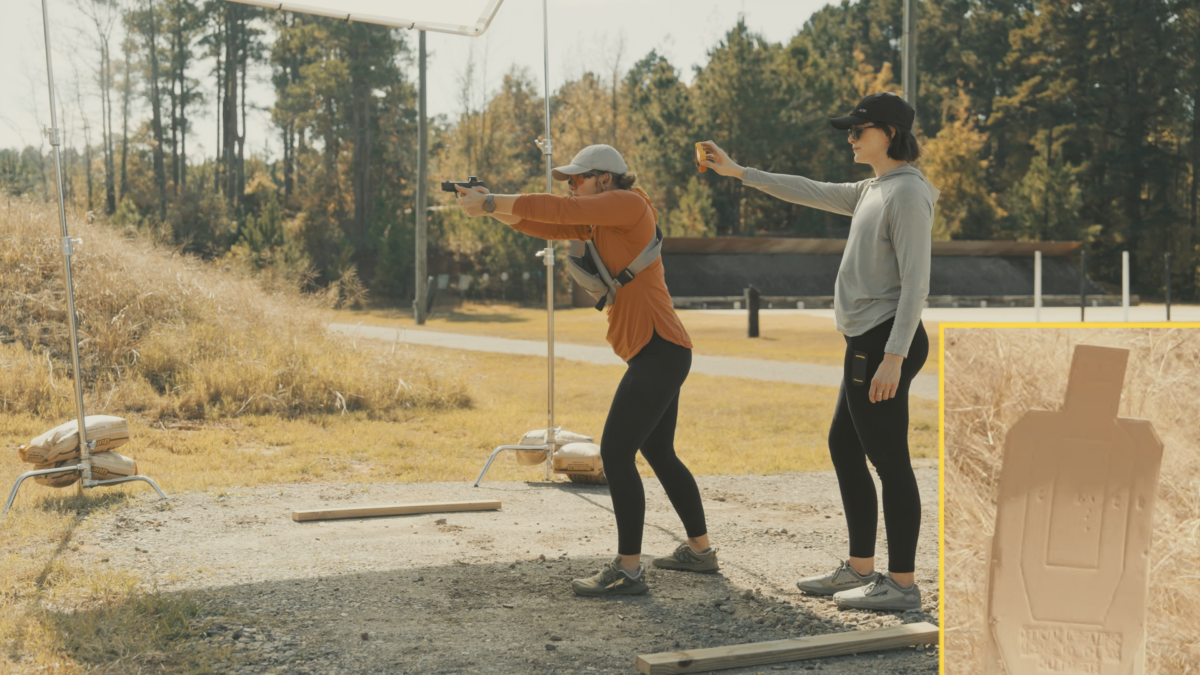
The focus here is building a perfect grip and body position under pressure. As Lena says, «If I have to use my pistol for self-defense, I want rounds on target. So, we’ve got to be pushing speed.»
2. Multiple Threat Drill: IWB Reloads and Transitions
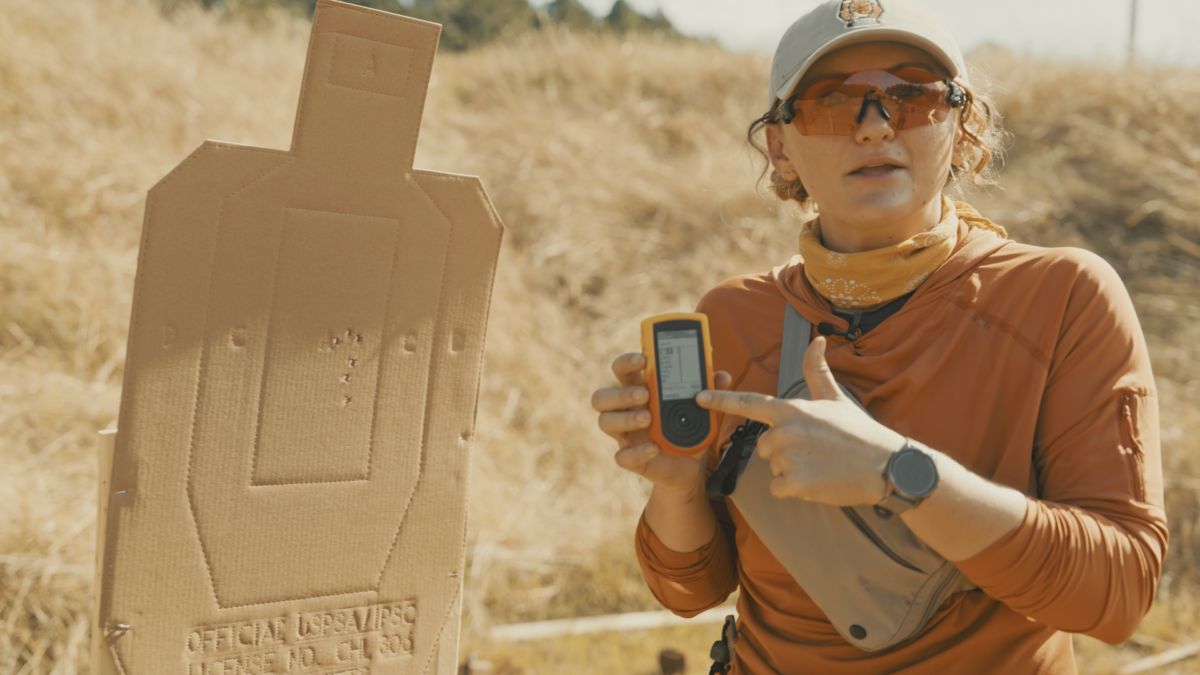
The second drill introduces transitions and the challenge of reloading from an IWB mag pouch. Using three targets at 5 yards, the sequence is: 2 shots on each target, reload, and then 2 more shots on each.
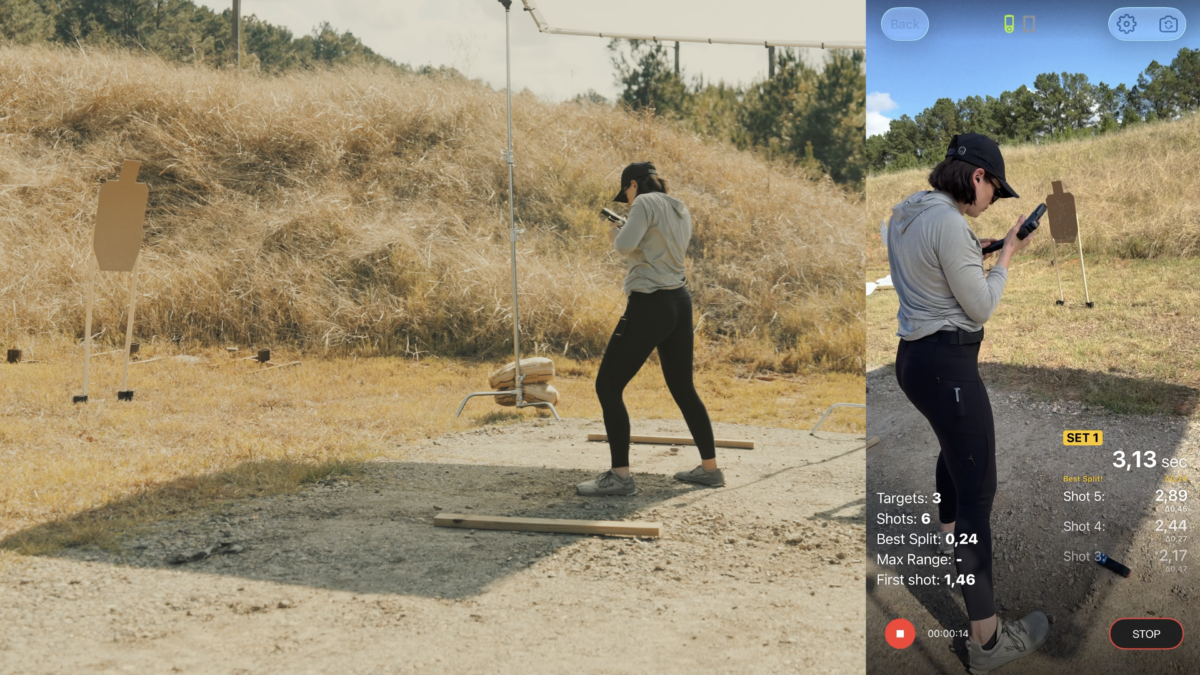
According to Sophia, this drill is vital for understanding your hardware:
It measures the splits (time between shots) and transitions (time between targets).
It tracks the time of your concealed reload.
Using the Shooters Global timer allows you to analyze these specific data points so you know exactly where you are losing time.
The Movement Drill: «Gun Up» Technique
Lena believes moving quickly with a firearm is an essential EDC skill. The goal isn’t necessarily «shooting on the move» yet, but rather moving efficiently between positions while maintaining a safe muzzle direction.
Lena identifies a major mistake most shooters make: moving with the gun down and only looking for the sights after they stop. Instead, she advocates for the «Gun Up» approach:
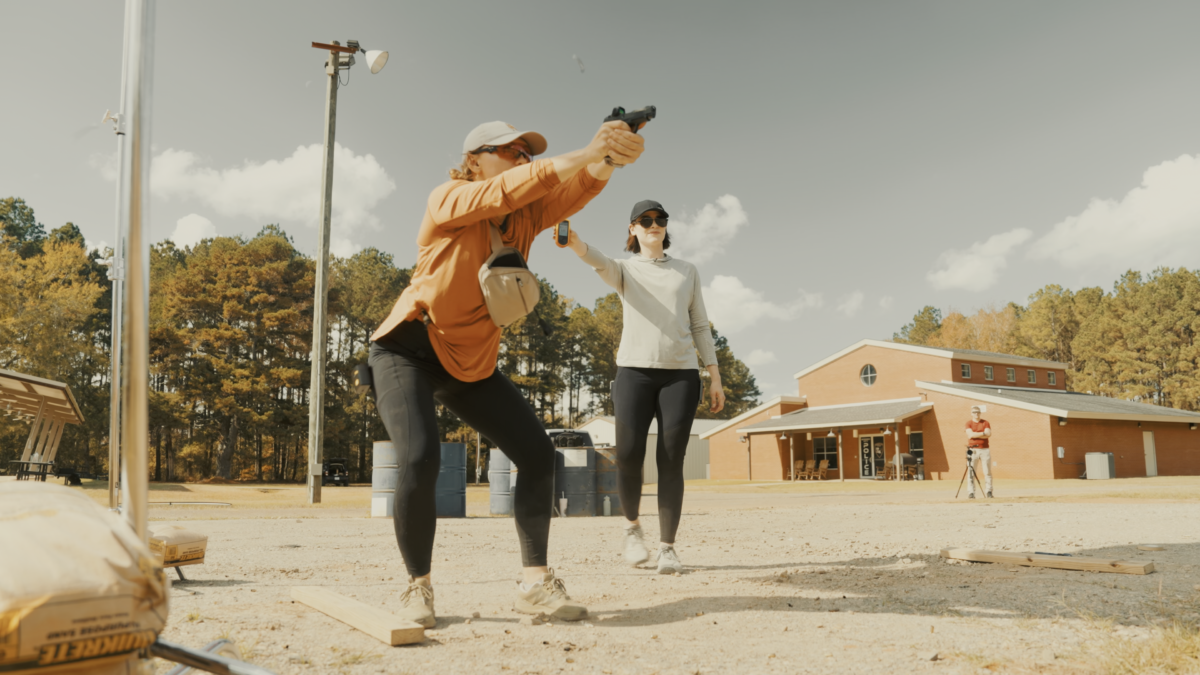
«What we want to do is… when I’m just a one step out, I need my gun to already be up on target, my sight to be there, so that when I come to a complete stop, I can immediately shoot.»
As Lena emphasizes, «It might seem like a small detail, but it is truly what makes the biggest difference.»
Why the Timer is Non-Negotiable
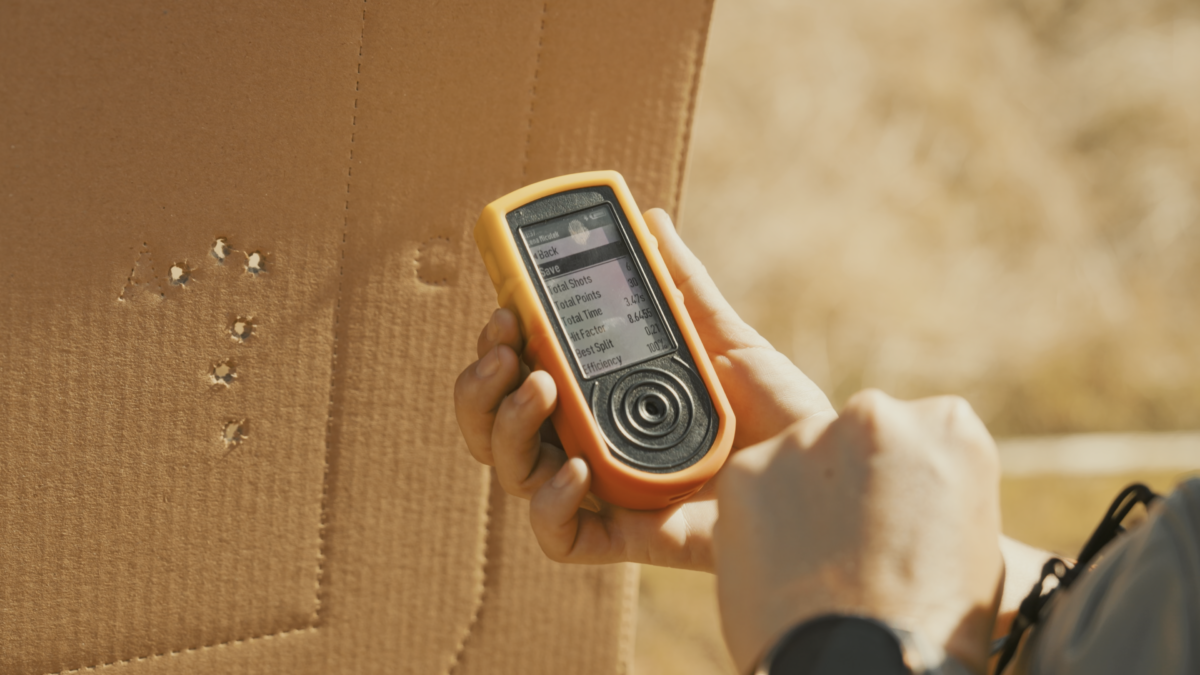
The common factor in all three drills is the shot timer. Without it, you are just practicing; with it, you are training. Lena insists that if you aren’t adding that pressure, «it’s just not going to be the best.»
The Payoff:
Solo Training: As Sophia notes, if you don’t have a partner, you can use the «Delay» setting on your timer to train alone effectively.
Data-Driven Training: You get stats to see your greatest struggles and successes.
Efficiency: You can specifically train your greatest weaknesses.
By utilizing these competition-born drills, you can ensure that your EDC skills are not just theoretical, but proven under the clock. Whether you are a seasoned shooter or just starting out, learning how to improve your EDC skills is a continuous journey that requires both the right tools and a disciplined mindset.
What is the best equipment for tracking EDC training progress? SG Timer 2 and Drills App
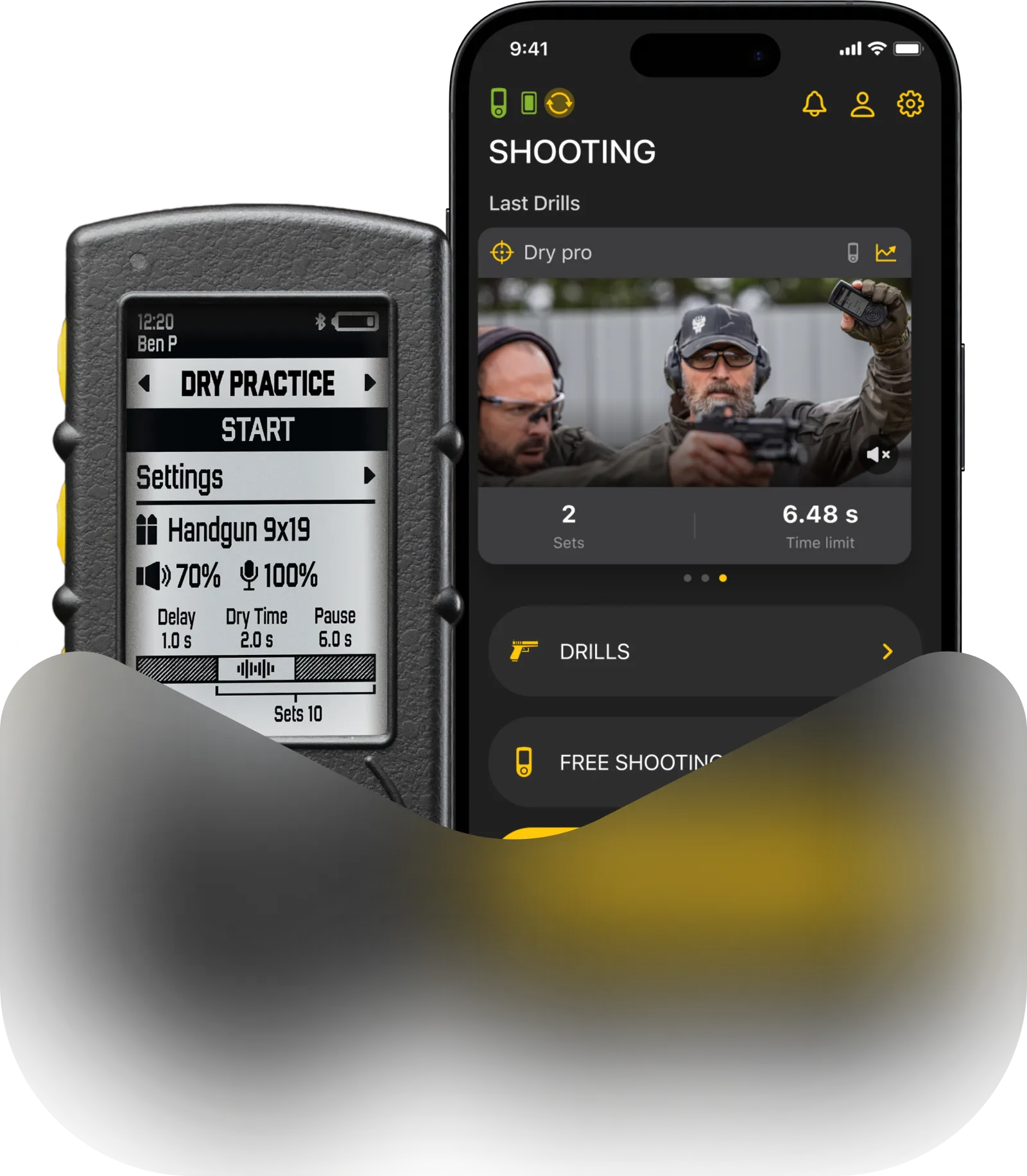
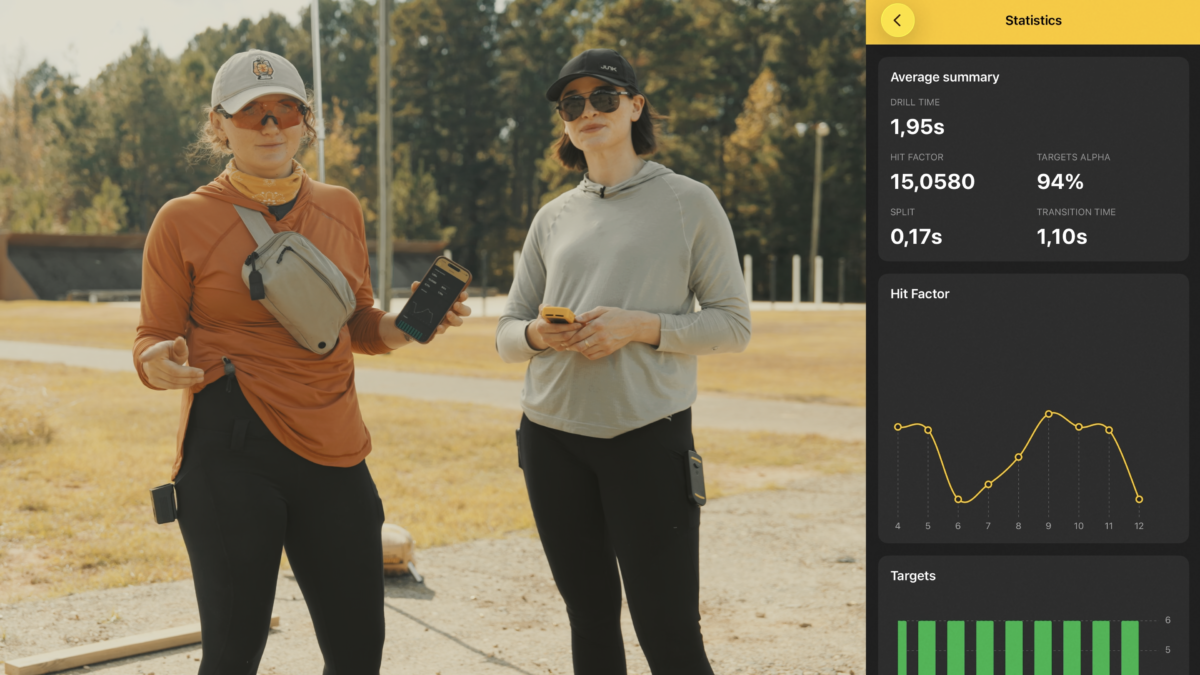
To make every training session measurable and highly effective, Lena and Sophia rely on the SG Timer 2. This next-gen device captures every shot with professional-grade precision, even in the most demanding environments.
The timer functions perfectly within the ecosystem of the Drills App, a powerful mobile companion that takes shooting analysis to the next level. With the app, you can record video of your drills with automatic data overlays—displaying your splits, first-shot time, and total time directly on the footage. This allows you to visually break down your movement and understand exactly how to improve your EDC skills by comparing data from different sessions.
➡ Learn more about the SG Timer 2 here
➡ Discover the full features of the Drills App here
Tags: Shooters Global, SG Timer 2, Drills App, Lena Miculek, EDC Training, Concealed Carry Drills, Shooting Skills, Defensive Shooting, Handgun Training, Bill Drill, Concealed Reload, Shooting Movement, Shot Timer, Shooting Progress Tracking, Firearm Training App, Shot Timer Video Overlay.